

Retinol is not just the latest Instagram shelfie, or super expensive serum. It goes back further – to Vitamin A research, dermatology, acne treatment and ultimately the long scientific journey of anti-aging skin care.
Retinoids have been employed in dermatology for many decades, and topical tretinoin was first approved for use in the U.S. for treatment of acne in 1971. It’s a huge achievement in the history of modern skincare with retinoids!
Wow Fact: Retinol family was first used – and used well – in serious acne treatment and medical dermatology, and is now a favourite ingredient in beauty shelves.
In the days gone by, skin care consisted of fairness cream, moisturizer or plain cleanser. Then the beauty industry started to realize that skin is not only about the outward radiance. As well as skin renewal, skin texture, fine lines, support and photoaging. It was here that retinol found its niche.
Wow Fact: Vitamin A and its derivatives are so significant in the skin turnover and collagen related aging debate, many experts consider it to be a revolution in dermatology.
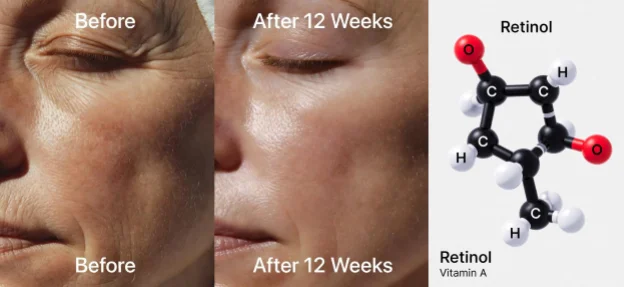
While retinol may sound like super luxury, it’s nothing to mess with. It’s not a calming cream that is soothing the skin immediately. Retinol is an active which works by changing. This means that it attempts to gradually recalibrate the skin in to a new rhythm.
Wow Fact: Retinol doesn’t necessarily lead to instant feel-good results—your skin might feel a little dry, flaky and sensitive, but that’s just a sign of the fact that it’s renewing itself.
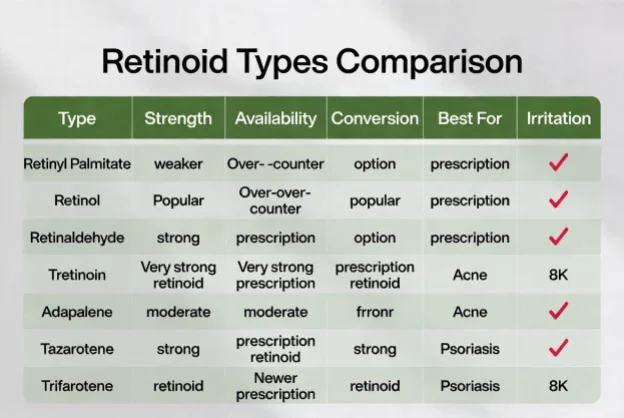
Retinol is a cosmetic retinoid; actually, it’s a member of the Vitamin A family. In other words, it’s an active ingredient that’s incorporated in formulations to increase their ability to improve skin tone, texture, dullness and fine lines.
Wow Fact: Retinol has to be converted into retinaldehyde and then to retinoic acid before it can work on the skin. This momentous journey makes retinol a relative mild, however slow, transformation.
But the following is a popular myth. Many believe that the higher the percentage, the better, with retinol. However, in reality it isn’t that straightforward.
The performance of retinol is dependent on:
- Formula quality
- Stability
- Packaging
- Skin tolerance
- Frequency
- User education
Wow Fact: The most effective retinol creams are generally a smarter choice than the poorest stabilized 1% retinol formulation.
As a novice, the first thing you’re likely to see in the retinol you purchase is the percentage. But, what a real formulator or an educated skin care specialist thinks is:
- Formula system
- Antioxidant support
- Packaging protection
- Claim language
- Target user
This is where Dermax Lab Academy can help. Ingredients are not only introduced as names here. They also find out about their tactics, vulnerabilities, and market risks and compliance logic.
Wow Fact: Retinol’s best kept secret: besides being a terrific ingredient, it’s a science of formulating.
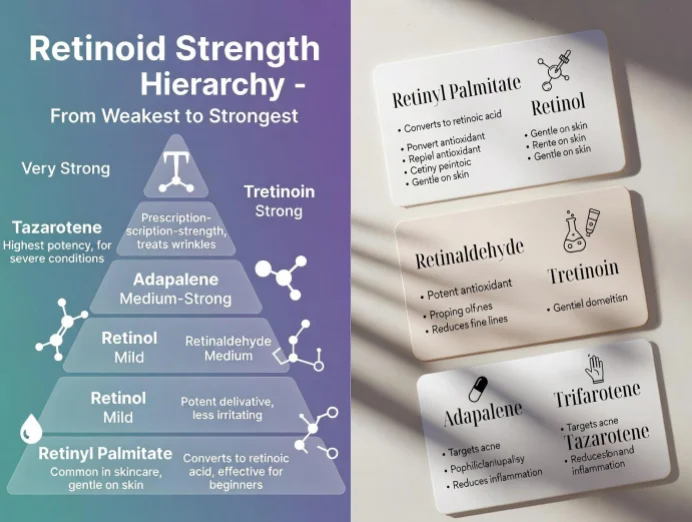
But, what is it about retinol?
It’s not all hype! This is part of years of skin care discussion based on evidence. Numerous studies and reviews of skin texture, fine lines and photoaging issues mention topical retinoids.
Wow Fact: Retinol is another anti-aging skin care term that is frequently used these days—along with “glow.” It’s connected to the more basic biological ability to aging skin.
Retinol is popular for:
- Use soft lines to make fine lines appear softer.
- Reduce use of uneven tone.
- Make coarse texture appear more smooth.
- Rejuvenate skin to give it a more youthful appearance
Retinoids also may be used as an adjunct treatment for acne in adults, but not everyone’s skin will respond to them in the same way.
Wow Fact: Retinol is not a miracle product. After 8-12 weeks or more, depending on how often it is used, there is a noticeable improvement for many users.
Let’s discuss the other half of the story. As well known as retinol is, it is little known. Many people start to use it as a daily regular serum. After that, in a couple days they say, “My skin is burned.” Let’s discuss the other half of the story. As well known as retinol is, it is little known. Many people start to use it as a daily regular serum. After that, in a couple days they say, “My skin is burned.”
Wow Fact: Building up skin tolerance is as crucial as achieving results when it comes to retinol.
People with sensitive, damaged barrier skin, rosacea, and stinging skin will have to make a very careful decision about starting retinol.
Retinol can often irritate the skin without the use of low strength, slow frequencies, moisturizer support and Sunscreen discipline.
Wow Fact: When a strong active is placed on a weak barrier it can become a villain not a hero, Wow Fact demonstrates this.
Retinol is easy to use, but not easy to get right. This implies that it is going to be created for novice users, however if it is utilized incorrectly, then issues will happen.
Some of the most common retinol blunders are:
- Daily for 1 week
- The use of AHA/BHA exfoliants at the same night
- Skipping moisturizer
- Not applying sunscreen
Wow Fact: When it comes to retinol, less is more, and more is more – the two in one.
The first step to a smart retinol routine is patience. This simple routine—pea-sized amount, clean dry skin, moisturizer—can help alleviate lots of irritation two nights a week. The “sandwich method” (moisturizer-retinol-moisturizer) is used by many users, for sensitive skin.
Wow Fact: Many times, retinol success isn’t about the power of the product, it’s about the intelligence of the routine.
A very crucial point is sunscreen. Retinol is usually found in nighttime skin care preparations, but if you don’t use sunscreen in the day, then the retinol odyssey is incomplete. UV protection is even more highly relevant when combined with a skin renewal active.
Wow Fact: While retinol is the hero of the night, sunscreen is the hero of the day.
A myth about retinol is that it makes skin thinner. The truth is, that’s not the case. Retinoid family products may cause some burning sensations to the skin at first because the product will encourage the upper layers of the skin to die. But because of its collagen supporting discussion it is important to the long haul skin ageing care.
Wow Fact: Peel and think that the skin is thinning out, but many times, it is just the skin’s surface renewal.
Most of all, let’s now discuss formulation.
Retinol is an extremely sensitive ingredient. When exposed to light, oxygen and heat it can deteriorate. That is the reason open mouth jars, transparency packaging or lack of control of oxygen can be dangerous to retinol formulations.
Wow Fact: The colour, smell and effectiveness of the formulation may change if the retinol breaks down.
Thus, a savvy retinol formulation is more than just about the percentage of active.
It needs:
- Packaging without air or packaging that protects the product from the air.
- Antioxidant support
- Suitable emollient system
- Irritation-buffering ingredients
- Clear usage instructions
Wow Fact: A lot of retinol products fail in the market because of their poor packaging, stability and education system.
Retinol doesn’t pair with all ingredients. Combining multiple use of the following actives and/or more aggressive exfoliating acids in the same routine can result in irritation overload:
Wow Fact: Retinol may stress the skin barrier and result in redness and dryness when used in skin care layering, if it’s not the right combination.
Some ingredients can help make a retinol program simpler, such as:
- Glycerin
- Hyaluronic acid
- Ceramide
- Panthenol
- Niacinamide
- Squalane or Barrier-supporting moisturizer
But there’s a lot of importance in formula balance.
Wow Fact: When combined with retinol, soothing ingredients and barrier friendliness can make all the difference and create a much more user friendly product.
Pregnant or lactating women should be treated with extra caution with regard to retinoids. Generally speaking, retinol (cosmetic or otherwise) shouldn’t be used during this time unless recommended by your dermatologist or health care professional.
Wow Fact: Education for skin care isn’t simply about what to use – it’s about Wow Fact! Also, to make clear when to avoid something.
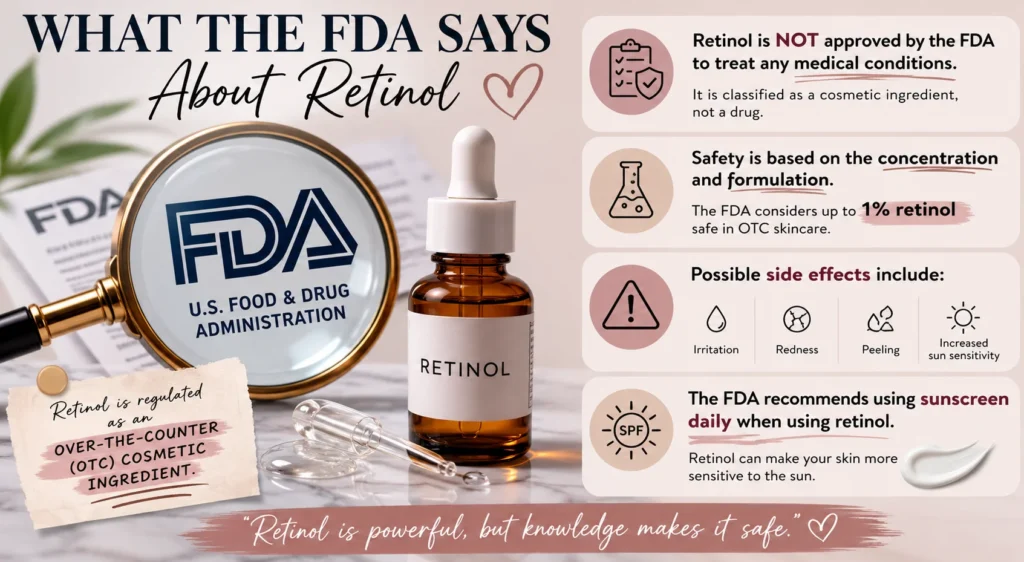
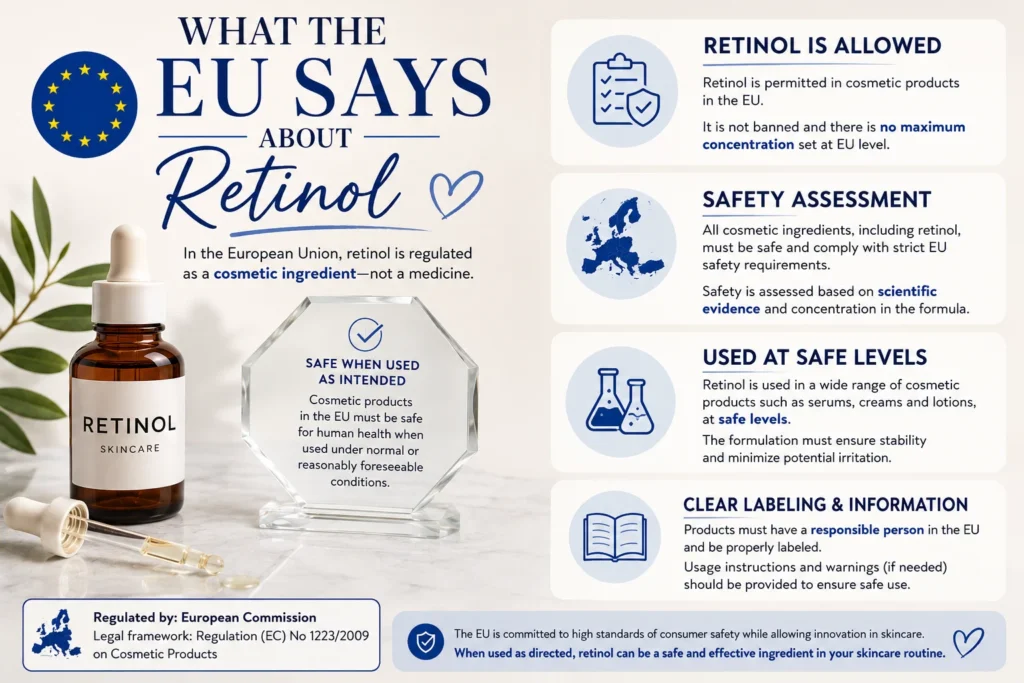
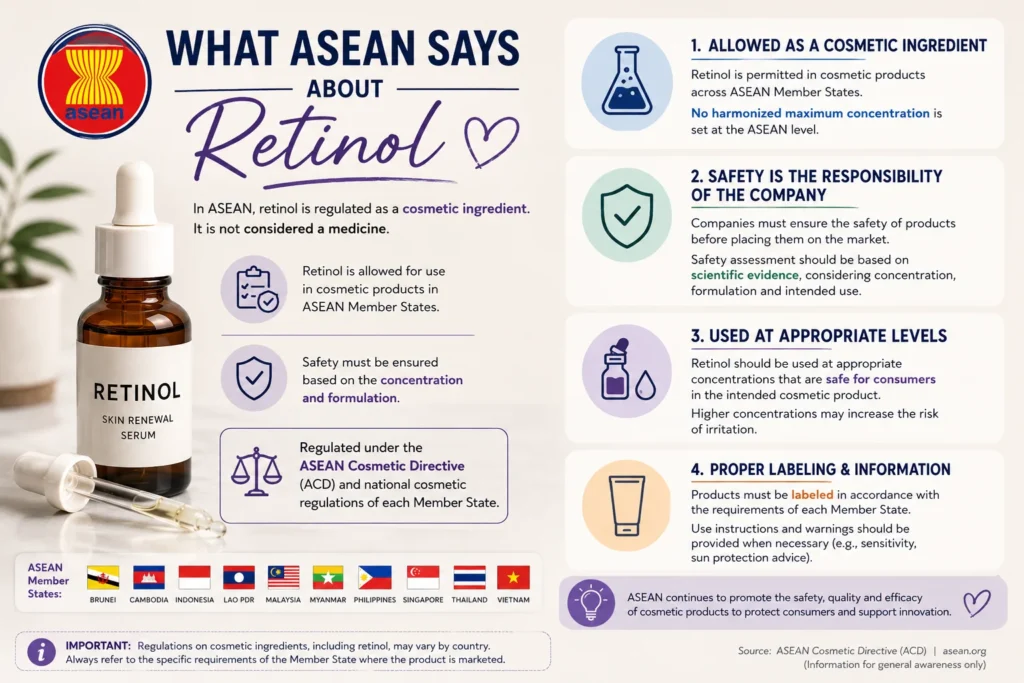
Next it will be seen on the regulatory side of the fence.Now it’s on the other side of the fence, the regulatory side.
World class formulation is not only about ingredients for beauty, but also law.
The EU Regulation 2024/996 sets limits on retinol, retinyl acetate and retinyl palmitate: Retinol Equivalent in body lotion: 0.05%. Liquid hair products: 0.3% RE (leave on/rinse off)
Wow Fact: The EU doesn’t only think of retinol as a beauty active, however, that’s what “Wow Fact” says. It also takes into account Vitamin A intake for the whole day from a safety point of view.
The EU has also devised obligations for warning labels if cosmetics contain Vitamin A. The labels are a warning to consumers about the amount of Vitamin A in their diet. The message is big—retinol may be sexy, but communication has to be safe—this little line is very small.
Wow Fact: The product label can sometimes be more important than the formula itself as it affects the use of the product.
In general, the FDA does not presume cosmetic products or ingredients are safe for use in the marketplace, unless they are color additives, in the USA. However, the Company or responsible person should have to ensure safety of its product(s) and safety substantiation. MoCRA has tightened the regulation of cosmetics.
Wow Fact: The name FDA-approved retinol cosmetic might be confusing because the approval process of cosmetic ingredients differs from that of drugs.
Responsible company/person is also very important in the ASEAN market. Compliance includes product safety, product labelling, ingredient restrictions and having the necessary product technical data ready for authorities.
Wow Fact: When a product is put on the market in the ASEAN region, only a formula is not necessarily created. Responsible documentation and local awareness of regulations is also needed.
This is where Dermax Lab Academy’s learning philosophy comes in very practical. Retinol is not only effective, it’s effective. We educate to the respect of a powerful ingredient. The true intelligence of formulation is understanding the chemistry of the ingredients, skin, packaging, law, label and consumer behavior.
To make something interesting, a beginner will start by gazing at an ingredient list, while a pro formulator will first draw a risk map.
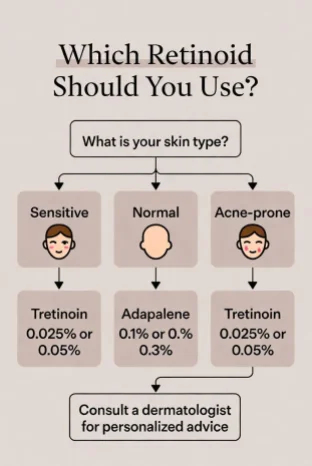
When is the time to use Retinol?
Use retinol when you’re going for a product idea of:
- Anti-aging, Night treatment
- Texture refinement
- Dullness correction
- Mature skin care
Retinol is an excellent storytelling ingredient to add to your premium positioning if you’re interested in evidence-based positioning.
Wow Fact: Retinol is a significant term in the skin care industry that can wield three times the magic – science, trust and market value.
Retinol should not be used at certain times.
If it contains any of the following, avoid using it as a retinol:
- Sensitive skin-focused
- Barrier repair-focused
- Pregnancy-safe positioned
- Very simple educational materials, mass produced.
- Poor packaging structures with
Wow Fact: If a good ingredient is presented in a bad product concept, it may damage the ingredient’s reputation.
The actual rule of retinol is that it is not a “percent game. It’s a sport game. The following will help a retinol regimen to work: Low strength, stable formula, protection packaging, progressive use, moisturiser support and sunscreen habit.
Wow Fact: Retinol skin care is not a race. Marathon, slow, clever and patient.
Retinol is a love to be had, but it’s not to be taken lightly. It’s an ingredient that can “communicate” with skin. If it is pushed too hard it reacts. If it’s given time, it works. Dermax Lab Academy is interested in creating this mentality: “Memorize ingredients? Understand Ingredients!
Wow Fact: There is more to skin care information than “what to use.” You also have the knowledge of “for whom, how much, when, how and at what risk”.
Author

Md. Al Emran Sardar
Co-Founder and instructor , Dermax Lab Academy
- Email : emransardar7368@gmail.com
- WhatsApp : +8801701015303
- LinkedIn : Linkedin
- Join my Group : D formula Lab