
Emran Sardar

Anti Aging Cream

অর্গানিক অ্যান্টি-এজিং ক্রিম: ত্বকের যত্নে এক স্মার্ট গল্প

Organic Anti-Aging Cream: A Smart Story of Skincare There was a time when skin felt firm, smooth, and fresh. The face had a natural glow, and looking in the mirror felt reassuring. But time works quietly. It does not arrive with noise. It slowly brings dryness, fine lines, and a tired look to the skin. That is the natural story of ageing. But the ending does not have to be bad. With the right care, the right ingredients, and the right formulation, skin can still look alive, soft, and healthy. This is where an organic anti-aging cream becomes important.At DERMAX LAB ACADEMY, learning this kind of formulation helps people understand that skincare is not just about beauty — it is a mix of science, patience, and balance. Why Does Skin Show Ageing Signs? Inside the skin, there are important proteins such as collagen and elastin. These help keep the skin firm, soft, and strong. As we age, their amount gradually decreases. Sun exposure, pollution, lack of sleep, smoking, and not drinking enough water all add extra stress to the skin. Because of this, dryness, wrinkles, dullness, and uneven skin tone may appear. This is a natural biological process, but the good news is that it can be slowed down a little. Good skincare and smart formulation play a major role here. What Is an Organic Anti-Aging Cream? An organic anti-aging cream is a skincare product made with as many plant-based, gentle, and skin-friendly ingredients as possible.It usually contains water phase, oil phase, humectants, butters, emulsifiers, botanical extracts, anti-aging actives, essential oils, and preservatives. All of these ingredients work together to moisturize the skin, support the barrier, and reduce the appearance of ageing signs. At DERMAX LAB ACADEMY, this balance is one of the most important parts of formulation learning. Because a good cream should not only look nice — it should actually work. How Does This Cream Work? An organic anti-aging cream usually works in three ways. Simply put, this cream gives the skin the support it needs to stay fresh, smooth, and comfortable. It is like a small care story for the skin that shows results little by little. Why Choose Organic Ingredients? Many people prefer organic skincare because it usually contains gentler and plant-based ingredients.For sensitive skin, this can often be a better option. Plant oils, natural butters, and botanical extracts help nourish and comfort the skin.Another big reason is that organic formulation is often seen as part of clean beauty and environmentally friendly skincare. That is why this approach is attractive for people who want to care for their skin more consciously.Learning this through a place like DERMAX LAB ACADEMY builds not only product knowledge, but also professional formulation awareness. Which Ingredients Can Be Used? An organic anti-aging cream can include several important ingredient groups. 1.Water Phase This part mainly contains water-based ingredients.It creates the light, refreshing, and hydrating base of the cream. Distilled Water This works as the main base of the formula. It helps provide moisture to the skin and keeps the cream’s texture stable. Aloe Vera Juice This soothes the skin, gives a cooling feel, and helps reduce redness or irritation.It is especially popular for sensitive skin. The water phase gives the cream a light, soothing, and comfortable foundation. 2.Carrier Oils Carrier oils are the oils that moisturize the skin, keep it soft, and support the barrier. Jojoba Oil It behaves very similarly to the skin’s natural sebum. That is why it works well for many skin types. Rosehip Oil It is rich in fatty acids and antioxidants. It helps improve skin texture, increase softness, and reduce the visible signs of ageing. Carrier oils are very important for deep nourishment. They help the skin stay soft and nourished for a longer time. 3.Butters Butters are richer, thicker, and more nourishing ingredients.They are especially useful for dry skin. Shea Butter It gives deep hydration to the skin and helps reduce roughness. It is very good for keeping the skin soft. Cocoa Butter It helps soften the skin and makes the cream feel more creamy and comforting. It can give the skin a plush feel. Butters create a warm, comforting layer on the skin. 4.Emulsifiers Emulsifiers are the ingredients that hold water and oil together.Without them, the cream can separate. Cetearyl Alcohol and Cetearyl Glucoside They help keep the cream stable, smooth, and homogenous. This makes the texture feel more luxurious. Glyceryl Stearate It gives the cream a smooth feel and helps with moisture retention. Without emulsifiers, good cream formulation is almost impossible.They are quiet but extremely important parts of the formula. 5.Humectants Humectants pull water into the skin and help hold it there.They help maintain skin plumpness and hydration. Glycerin This is a very well-known humectant. It helps keep the skin hydrated, smooth, and fuller-looking. Hyaluronic Acid It can hold a large amount of water, which makes the skin look fresher, dewier, and softer. Humectants are especially effective for dry and mature skin. 6.Anti-Aging Actives This is the most targeted and important part of the formula.This is where the real work against ageing signs happens. Vitamin C It helps brighten the skin and supports collagen. It is very useful for making dull skin look more lively. Niacinamide It improves the skin barrier, reduces uneven tone, and helps smooth the skin texture. It is a real multi-tasking ingredient. Coenzyme Q10 It is a powerful antioxidant that helps protect the skin from oxidative stress.It is useful for reducing the tired look linked to ageing. These active ingredients are the true heroes of anti-aging formulation. 7) Botanical Extracts These soothe the skin and provide extra protection. They are very important in plant-based skincare. Green Tea Extract It is rich in antioxidants and helps reduce inflammation. It works well for sensitive or stressed skin. Licorice Root Extract It helps balance skin tone. It is especially helpful for uneven skin tone. Botanical extracts add a gentle, nature-inspired touch to the formula. 8) Essential Oils Essential oils are used in

অর্গানিক অ্যান্টি-এজিং ক্রিম: ত্বকের যত্নে এক স্মার্ট গল্প Read More »

surfactant

সার্ফ্যাক্ট্যান্টের বিজ্ঞান: ক্লিনজিং, ফোম আর ফর্মুলেশনের আসল গল্প

A comprehensive overview of the science of surfactants. At one time, man used water, herbs, even ash and animal fat to wash his face. Next, a silent hero came on the scene – surfactant. The name might be a bit hard to say, but its task is very simple – it is to make water and oil do their job, to remove dirt easily. Wow fact: Surfactants are able to “communicate” with both water and oil simultaneously because of their special structure. One side is dirty, the other side is clean (water). At DERMAX LAB ACADEMY, surfactants are given great importance when teaching formulation. This tiny but potent ingredient is crucial to all of these products such as a cleanser, shampoo, body wash, micellar water or face wash.  So What is a Surfactant? Surfactant is derived from surface-active agent. In other words, it’s a molecule that has two sides, a hydrophilic (water-loving) side and a hydrophobic (oil-loving) side. This biophilia nature causes the surfactant to form a bridge between water and oil. That is, oil on its own is not easily washed away and water on its own is not capable of removing oily dirt. However, when a surfactant shows up, it says to you, “Don’t worry, I’m here.” Wow fact: The property of many surfactants is to form ‘micelles’ which are like tiny spheres that trap oil and dirt inside and then wash it away with water.  So what are Surfactants? Surfactants are not only cleaning agents, they also have a wide variety of other functions. They are like multitasking cosmetic formulation workers. Cleansing The most common function. Surfactants are used to get rid of the accumulation of oil, dust, sweat and dirt on the skin or hair. Emulsifying Certain surfactants are able to form an emulsion of oil and water. It is very crucial in creams, lotions and a few skin care products. Solubilizing Surfactants are used to disperse small quantities of fragrance, essential oil or oil-based ingredients in water-based preparations. Foaming While not every surfactant can produce foam, some will produce a rich foam, giving the user a greater sense of “cleanliness.” But it’s not to be forgotten: more foam doesn’t necessarily equal more cleaning. Wow fact: Many mild cleansers are very effective at cleaning the skin without all the lather. Therefore, judging based on foam isn’t always right.  History of Surfactants Surfactants have a very ancient history. Soap-like substances were made by the ancient Egyptians from animal fat and ash. In Roman times, there were also several types of soap-like substances used for cleanliness. This age old necessity for cleansing has become very ‘smart’ with the advent of modern chemistry. All of today’s shampoo, face wash, body wash, and micellar waters rely on surfactant science. In places like DERMAX LAB ACADEMY, it’s possible to see that formulation is not just about making a product, it’s about the evolution of science.  Types of Surfactants Generally, there are four groups of surfactant. Their behavior is different, therefore, their functions are also different. Anionic These have a negative charge. They give good lathering and are high lathering. SLS, SLES, sodium cocoyl isethionate are examples of these  Cationic These have a positive charge. They are primarily used as conditioning agents such as in haircare. BTAC is an excellent buffer for the pH range 4 to 10.Examples of buffers: BTAC in pH range 4 – 10 is an excellent buffer. Nonionic These are free of charge. They are mild, versatile and are frequently used as solubilizers or emulsifiers. Purpose: Emulsifier, surfactant, food stabilizer, and sweetener Amphoteric They can act positive or negative as per pH. They enhance the mildness and aid in the stability of foams. Example: cocamidopropyl betaine Wow fact: In contemporary cleansers, several different surfactants are mixed together to ensure that the cleansing ability, lather, gentle nature and skin-feel are kept in proper balance. Where & How Much Surfactant Blend Is Used? A handy guide. The final formula can vary according to the type of product, the pH, the actives used and the skin feel.  1) Face Wash Typically 6% to 12% blend of total surfactant Mildness is of the most importance here. If your skin is sensitive, the lower end of the range is better.  2) Shampoo Typically, 12%-20% Surfactant Blend, total. Here, cleansing power, foam and rinse feel are essential.  3) Body Wash Typically, a total surfactant blend of 10% to 18%. It provides a bit more cleansing as a face wash, but attempts to retain a softer feel than shampoo. 4) Hand Wash Typically 8-15% blend of total surfactant Quick cleanse is necessary, but not too drying to the skin.  5) Micellar Water Typically 0.5% – 5% surfactant / solubilizing system An ultra-mild system is required as this product tends to remain on the skin.  6) Cleansing cream (cleansing lotion) Usually 2%–8% surfactant system So here we need comfort and cleansing and use a slightly lower but effective range. Wow fact: The same surfactant system can be used at a higher ratio in a cleanser, at a lower ratio in micellar water, and at a different ratio in an emulsifying system. This means that the ingredient changes its function.  What Surfactant to Use and When? The first question that should be asked when making a formulation is—what type of product is it?  Rinse-Off Product Examples: Cleanser, Shampoo, Body Wash. In this case, it’s all about the cleansing action and the foam factor. These products only need to last a short time after being washed off the skin, so a surfactant system is designed to not only remove dirt and oil efficiently, but to provide an enjoyable foaming experience too. Foam and Cleansing are important in Rinse-Off Products for what reasons? Surfactants play a primary role in rinse-off formulations in that they remove the dirt from the surface of the skin. Anionic surfactants are more commonly used as they have good cleansing properties and generate copious amounts of lather. But, in the modern formulations, cleansing is

সার্ফ্যাক্ট্যান্টের বিজ্ঞান: ক্লিনজিং, ফোম আর ফর্মুলেশনের আসল গল্প Read More »

formulation

কসমেটিক ফর্মুলেশন শেখা আর সত্যিকারের ভালো ফর্মুলেটর হওয়ার গোমর ফাঁস — যে ১০টি স্কিল বই শেখায় না !

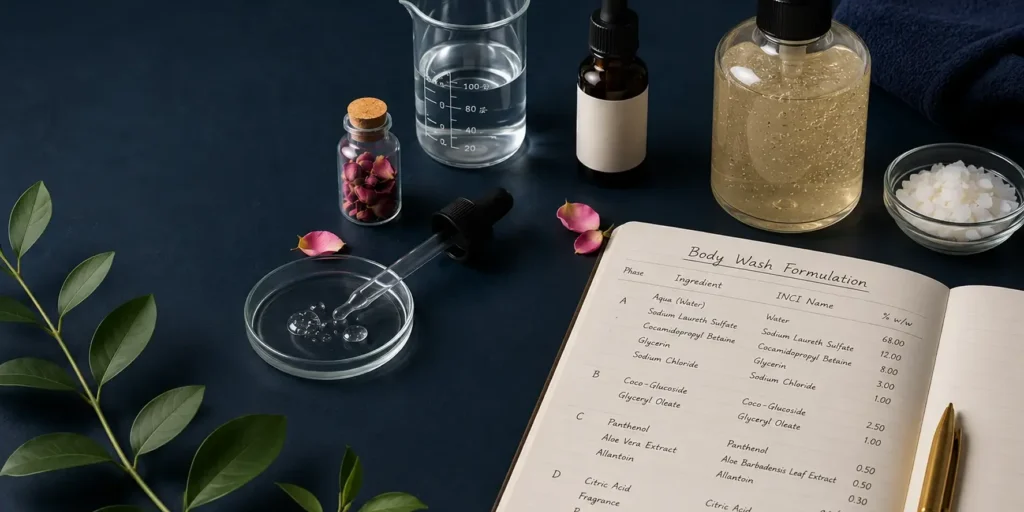
It begins in a small lab beaker, but the real fight is in the marketplace. Let’s say you made 500 grams of cream for the very first time. The emulsion worked, the texture was not bad and the pH was quite well behaved. You said to yourself, “That’s it! Now I am a formulator!” Then after two weeks oil starts to float on top of that cream. After three months, the preservative system fails in practice. The supplier quietly changes the grade of the emulsifier and your silky cream turns weirdly sticky. When you go from 500 grams to 50 kg, the formula treats you as if it has never seen you. That’s the true divide. Another thing is learning cosmetic formulation. The skill of knowing how to conceive well is a totally different thing. You learn the skill by reading TDS, keeping a lab journal, knowing suppliers, doing sensory evaluation, reading the language of stability fail, writing safe claims and knowing market reality. Dermax Lab Academy teaches exactly how to fill this gap, not just “how to make a cream” but “how to make a product that survives in the lab, on the shelf, with customers, and at the regulatory table. A Little History: When Did Formulation in Cosmetics Get So Difficult? For thousands of years, oils, waxes, fragrances and plant extracts have been used for skin and beauty. Ancient Egyptian beauty practices included oils, honey, mineral colors and perfumes. But the true birth of modern cosmetic formulation took place when beauty products moved beyond “home mixtures” into a system of industry, science, microbiology, packaging and law. People used to make a balm or an oil for their own use. Now a cream has to survive hot Chennai, dry Delhi, humid Dhaka, aircon shops, online delivery, plastic jars, glass bottles, 18 months shelf life and social media claims. Did you know- 1: Modern cosmetic formulation is not just chemistry. It is a ‘live system’ where chemistry, microbiology, physics, supply chain, law and human sensory experience all come into play. 1. Reading Raw Material TDS: The True ID Card of an Ingredient A common mistake for new formulators is buying ingredients on the basis of a pretty marketing brochure from a supplier. But a brochure is a story dressed up. The real birth certificate is a Technical Data Sheet, or TDS. A TDS tells you: You are buying blind if you don’t check the INCI name Just because it says “Hyaluronic Acid” doesn’t mean all products are created equal. For one supplier it could be pure Sodium Hyaluronate. In other supplier’s case it may be a molecular weight blend of several. Elsewhere it can be a diluted raw material in glycerin. The marketing name speaks a dream. The Truth is in the INCI name. Did you know- 2: Hyaluronic Acid raw materials sold under the same name may not feel the same on the skin, because changing the molecular weight distribution changes viscosity, skin feel and hydration perception. Must Follow Recommended Use Level If the TDS says 0.5-2% that is not a decorative line. If you use less it might not work. If you use more, you may be damaging the texture, increasing irritation or wasting money. At Dermax Lab Academy, formulators are taught that the idea “if an ingredient is good, using more will be better” can often destroy the formula. If the phase compatibility is not right, the ingredient will stay on paper, not go into the formula. Some ingredients go into the water phase, some into the oil phase and some into the cool down phase. For example , if you add a heat sensitive active at 75C , the name is still in the formula but the function is not . pH Is the State of the Formula Vitamin C or L-Ascorbic Acid generally likes a low pH. Salicylic Acid needs to be in an acidic environment to function as a BHA. AHA is also pH dependent. If the pH is wrong, an active ingredient is often just a “label decoration” ingredient. Make it a Habit Before adding a new ingredient to a formula, read the entire ingredient’s TDS. Then write a one-page synopsis of the ingredients. It may take 20 minutes but it can save you 20 days of trouble later. 2. Formulation Lab Journal: Don’t Rely on Your Memory A new formulator thinks, “I will remember this!” Three months later, trying to replicate the same batch, the only question that comes to mind is – “When did I add Phase B?” Lab journal. Not just a notebook. It’s your detective journal of formulations. What Should Be in a Good Lab Notebook? Formula I.D. & Version No.: Formula-001-v1 Formula-001-v2 Otherwise, which batch was sent for stability testing, which one was a customer sample, which one was a failed trial – everything will become confusing. Batch Weight (Kg): Do not say the percentage only. Actual Weight (in grams) * * Without knowing the total batch size it is hard to recreate the real batch from percentage. Supplier/Lot number: Two lots of the same ingredient can act differently. If the supplier changes the grade, then your formula changes without you even changing the formula. Notes on the process: These little details solve huge mysteries. What temperature you mixed, how many minutes you homogenized, what Phase A looked like, what the pH was before pH adjustment. Sensory evaluation at T0: Write everything: color, smell, viscosity, spreadability, tackiness, absorption, residue. Your starting point is T0. pH Monitoring: The pH might be fine today but it won’t be fine after three months. Did you know- 3 Many emulsions look beautiful on day one, but pH drift, viscosity drop or droplet coalescence may start during storage and are often seen much later. Golden Rule If it wasn’t written down, it didn’t happen. Memory tells stories, notes tell the truth. 3. Stability Testing: The Language of the Formula, Not Pass/Fail Many people have a stability testing exam. They are happy if

কসমেটিক ফর্মুলেশন শেখা আর সত্যিকারের ভালো ফর্মুলেটর হওয়ার গোমর ফাঁস — যে ১০টি স্কিল বই শেখায় না ! Read More »