

A comprehensive overview of the science of surfactants.
At one time, man used water, herbs, even ash and animal fat to wash his face. Next, a silent hero came on the scene – surfactant. The name might be a bit hard to say, but its task is very simple – it is to make water and oil do their job, to remove dirt easily.
Wow fact: Surfactants are able to “communicate” with both water and oil simultaneously because of their special structure. One side is dirty, the other side is clean (water).
At DERMAX LAB ACADEMY, surfactants are given great importance when teaching formulation. This tiny but potent ingredient is crucial to all of these products such as a cleanser, shampoo, body wash, micellar water or face wash.
So What is a Surfactant?
Surfactant is derived from surface-active agent. In other words, it’s a molecule that has two sides, a hydrophilic (water-loving) side and a hydrophobic (oil-loving) side. This biophilia nature causes the surfactant to form a bridge between water and oil.
That is, oil on its own is not easily washed away and water on its own is not capable of removing oily dirt. However, when a surfactant shows up, it says to you, “Don’t worry, I’m here.”
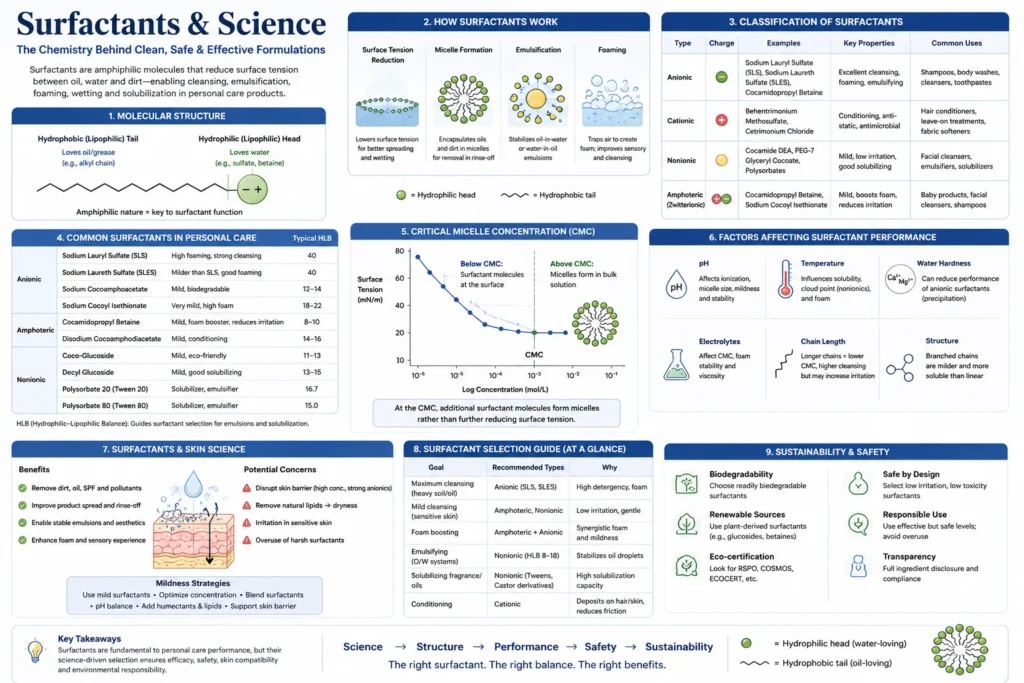
Wow fact: The property of many surfactants is to form ‘micelles’ which are like tiny spheres that trap oil and dirt inside and then wash it away with water.
So what are Surfactants?
Surfactants are not only cleaning agents, they also have a wide variety of other functions. They are like multitasking cosmetic formulation workers.
Cleansing
The most common function. Surfactants are used to get rid of the accumulation of oil, dust, sweat and dirt on the skin or hair.
Emulsifying
Certain surfactants are able to form an emulsion of oil and water. It is very crucial in creams, lotions and a few skin care products.
Solubilizing
Surfactants are used to disperse small quantities of fragrance, essential oil or oil-based ingredients in water-based preparations.
Foaming
While not every surfactant can produce foam, some will produce a rich foam, giving the user a greater sense of “cleanliness.” But it’s not to be forgotten: more foam doesn’t necessarily equal more cleaning.
Wow fact: Many mild cleansers are very effective at cleaning the skin without all the lather. Therefore, judging based on foam isn’t always right.
History of Surfactants
Surfactants have a very ancient history. Soap-like substances were made by the ancient Egyptians from animal fat and ash. In Roman times, there were also several types of soap-like substances used for cleanliness.
This age old necessity for cleansing has become very ‘smart’ with the advent of modern chemistry. All of today’s shampoo, face wash, body wash, and micellar waters rely on surfactant science.
In places like DERMAX LAB ACADEMY, it’s possible to see that formulation is not just about making a product, it’s about the evolution of science.
Types of Surfactants
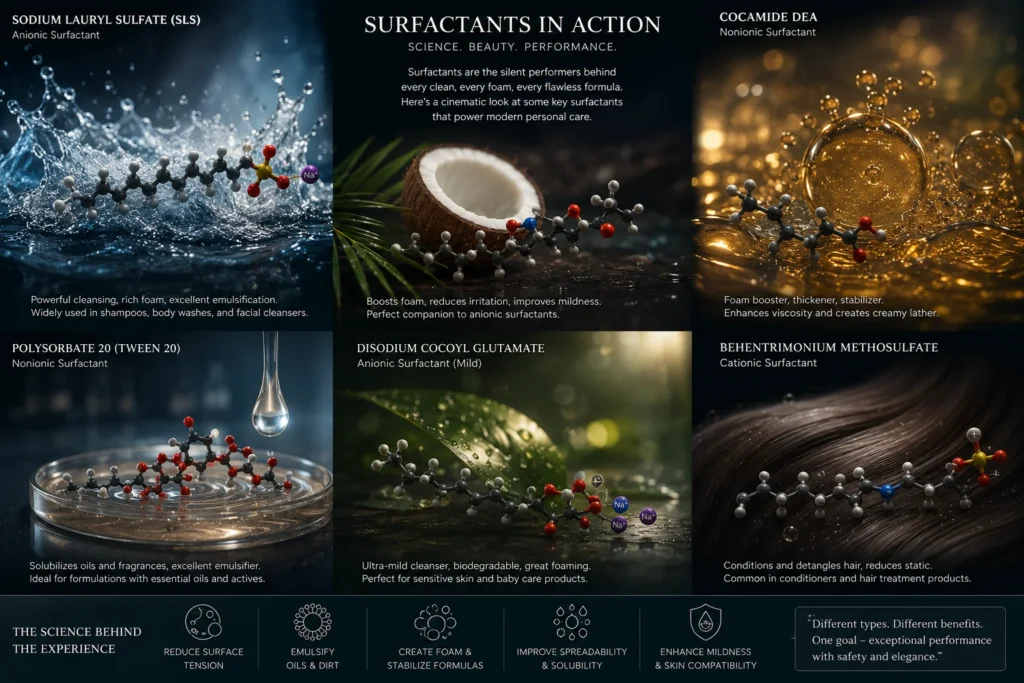
Generally, there are four groups of surfactant. Their behavior is different, therefore, their functions are also different.
Anionic
These have a negative charge. They give good lathering and are high lathering.
SLS, SLES, sodium cocoyl isethionate are examples of these
Cationic
These have a positive charge. They are primarily used as conditioning agents such as in haircare.
BTAC is an excellent buffer for the pH range 4 to 10.Examples of buffers: BTAC in pH range 4 – 10 is an excellent buffer.
Nonionic
These are free of charge. They are mild, versatile and are frequently used as solubilizers or emulsifiers.
Purpose: Emulsifier, surfactant, food stabilizer, and sweetener
Amphoteric
They can act positive or negative as per pH. They enhance the mildness and aid in the stability of foams.
Example: cocamidopropyl betaine
Wow fact: In contemporary cleansers, several different surfactants are mixed together to ensure that the cleansing ability, lather, gentle nature and skin-feel are kept in proper balance.
Where & How Much Surfactant Blend Is Used?
A handy guide. The final formula can vary according to the type of product, the pH, the actives used and the skin feel.
1) Face Wash
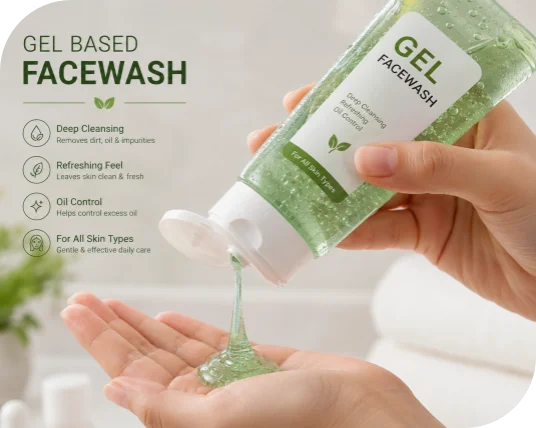
Typically 6% to 12% blend of total surfactant
Mildness is of the most importance here.
If your skin is sensitive, the lower end of the range is better.
2) Shampoo
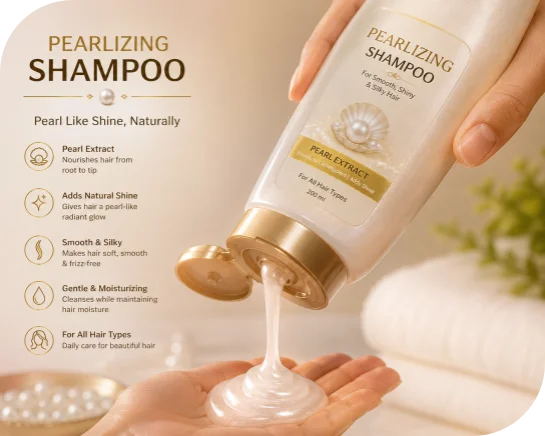
Typically, 12%-20% Surfactant Blend, total.
Here, cleansing power, foam and rinse feel are essential.
3) Body Wash
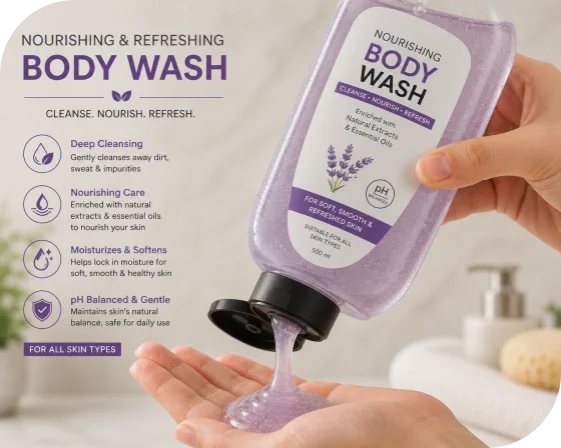
Typically, a total surfactant blend of 10% to 18%.
It provides a bit more cleansing as a face wash, but attempts to retain a softer feel than shampoo.
4) Hand Wash
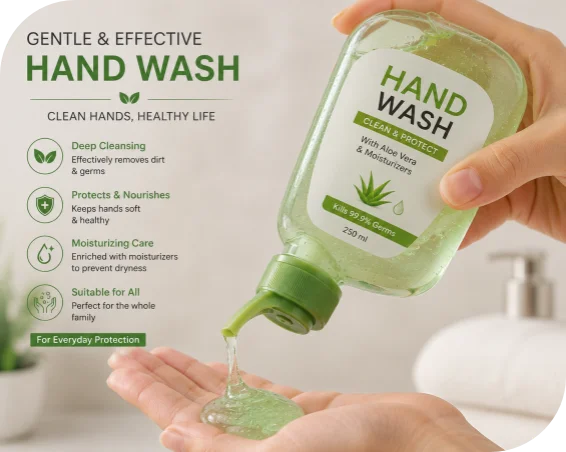
Typically 8-15% blend of total surfactant
Quick cleanse is necessary, but not too drying to the skin.
5) Micellar Water
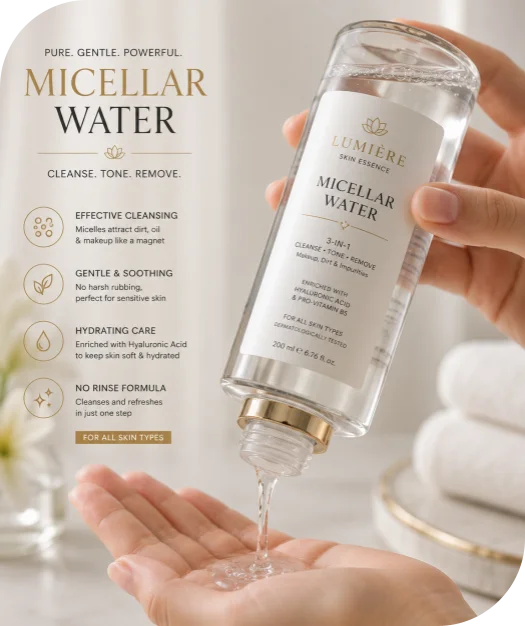
Typically 0.5% – 5% surfactant / solubilizing system
An ultra-mild system is required as this product tends to remain on the skin.
6) Cleansing cream (cleansing lotion)
Usually 2%–8% surfactant system
So here we need comfort and cleansing and use a slightly lower but effective range.
Wow fact: The same surfactant system can be used at a higher ratio in a cleanser, at a lower ratio in micellar water, and at a different ratio in an emulsifying system. This means that the ingredient changes its function.
What Surfactant to Use and When?
The first question that should be asked when making a formulation is—what type of product is it?
Rinse-Off Product
Examples: Cleanser, Shampoo, Body Wash. In this case, it’s all about the cleansing action and the foam factor. These products only need to last a short time after being washed off the skin, so a surfactant system is designed to not only remove dirt and oil efficiently, but to provide an enjoyable foaming experience too.
Foam and Cleansing are important in Rinse-Off Products for what reasons?
Surfactants play a primary role in rinse-off formulations in that they remove the dirt from the surface of the skin. Anionic surfactants are more commonly used as they have good cleansing properties and generate copious amounts of lather. But, in the modern formulations, cleansing is not the sole concern. The feel after rinsing is also very important.
The amount of surfactant blend used is determined by the level of usage.
The concentration of the surfactant varies from one rinse-off product to the next. For example:
Face Wash
Total Surfactant Blend is typically 6% – 12%. The primary difficulty is keeping the skin on the face soft.
Shampoo
For this an 12%-20% total surfactant blend is necessary. To get rid of dirt and extra oil from hair, a strong cleansing power is required.
Body Wash
10% – 18% surfactant is generally used. It cleanses a little more than a face wash, but attempts to bring a softer skin feel than a shampoo.
Wow fact: There is no need for the skin to be made ‘very dry’ or ‘stripped’ in good cleansing in a rinse-off product. By means of smart formulation, great cleansing can be accomplished without harming the skin barrier.
Leave-On Product
Examples: Micellar Water or light cleansing Product. Ultra-mild and low foaming system is better here.
Sensitive Skin
Nonionic and amphoteric surfactants are more appropriate. You can make the formula even better by adding moisturizers or even conditioning agents.
pH Compatibility
Not all the surfactants are effective at all pH. Certain of the surfactants can be irritating or unstable at different pH levels.
Wow fact: There are also some surfactant products that will alter their performance as a result of the pH. This is because an ingredient can have different properties under different conditions.
So what Surfactant for what Function?
For Cleansing
- Sodium cocoyl isethionate (SCI)
- Cocamidopropyl betaine
- Disodium laureth sulfosuccinate
For Solubilizing
- PEG-40 hydrogenated castor oil is a substance that is frequently used in the formulation.
- Polysorbate 20
- Polysorbate 80
- Caprylyl/capryl glucoside
For Emulsifying Systems
- Ceteareth-20
- Sodium stearoyl lactylate
- Sorbitan stearate + Polysorbate 60
These ingredients combine to make the formula smoother, more stable and easier to use.
Mild does NOT mean weak.
Many people believe that gentle surfactant is weak surfactant. This is not the case, however. A good surfactant system should be formulated to be good for cleaning and not disrupt the skin barrier.
Wow fact – a good cleanser will clean the skin but will not “strip” it and make it dry. This is where the true smart formulation magic happens.
The technical aspects of formulation.
Selection of a surfactant—several factors are very important:
- Product format
- pH target
- Mildness
- Compatibility
- Foam profile
Once you can answer these questions, you can formulation a lot more professionally. At places like Dermax Lab Academy, this type of logical formulation thinking is taught.
Good Manufacturing Practice (GMP), FDA, EU, ASEAN Regulation
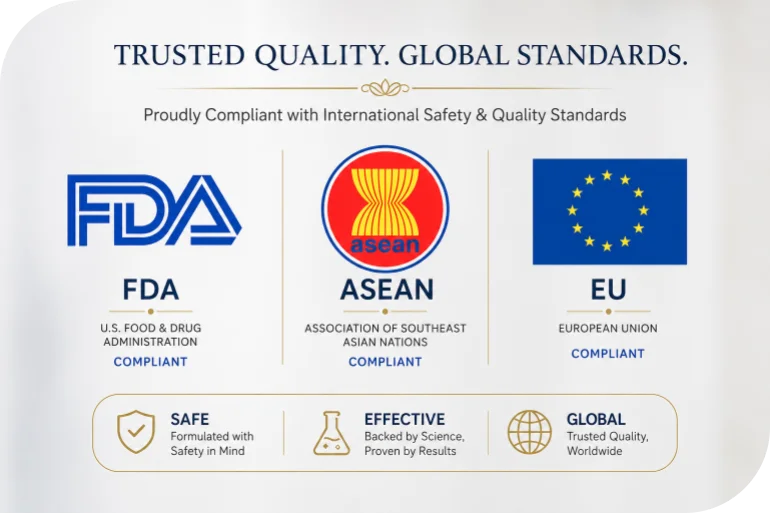
Even the best formula is not sufficient to get a cosmetic surfactant-based product to market. The rules must also be adhered to.
The FDA, EU, ASEAN Regulation and Compliance
To bring a cosmetic surfactant-based product or any cosmetic product to market, only having a good formula is not enough. It is extremely important to follow the international and local regulations.
FDA / United States
The FDA (Food and Drug Administration) serves as the regulatory agency for cosmetic products in the United States. They have the following primary needs:
- Labeling Truthfulness: Labeling must be accurate and may not deceive the consumer. Labeling must be accurate and may not deceive the consumer.
- Claim Limitation: Cosmetics cannot claim to be a “drug” or “medicine.” For instance, rather than claiming it removes wrinkles, it is safer to claim that it helps to reduce the appearance of wrinkles.
- Safety Substantiation: The company will have to guarantee the safety of its product and keep safety data.
EU / European Union
The regulation of cosmetics is extremely strict in Europe. The following points are essential to selling a product here:
- Safety Assessment: A qualified assessor is required to prepare a safety assessment report for every product.
- Ingredient Restriction: A certain number of surfactants or active ingredients are especially limited in use.
- Technical Documentation: A technical file and claim substantiation (evidence of claims) are needed.
ASEAN / Southeast Asia
ASEAN Cosmetic Directive states that for marketability within the countries of ASEAN, the products must be:
- Ingredient Listing: According to international INCI rules, the list of ingredients must be mentioned.
- Traceability: Label should be clearly written with Batch number, expiry date and precautions.
Wow fact: A product can be legal in one country, but illegal in another country due to its ingredients or claims. That means for global marketing, regulatory knowledge is a must-have.
EU
Safety assessment, ingredient restriction, technical documentation and claims substantiation in Europe are very important for cosmetic products.
ASEAN
For the ASEAN area, ingredients, precautions, batch number, expiration date and label details have to be clearly stated. Some local requirements may vary from country to country.
Wow fact: The same product can be marketed in one market and not in another due to ingredients or claims. Therefore it is crucial to have knowledge of the regulations for marketing matters as well.
Why DERMAX LAB ACADEMY is important?
Studying surfactant science at DERMAX LAB ACADEMY is not just about memorizing ingredients. Here, learners gain insight into the design of cleansing systems, foam balance, mild formulation strategy, product compatibility and regulatory awareness.
The knowledge that is useful to everyone – from beginner to aspiring Formulator. Even a small change in an ingredient in cosmetic formulation can alter the performance of the product.
Final Words
Surfactants are the unsung workhorses in cosmetics. They clear, emulsify, solubilize and foam. However, not all types of surfactants are created equal. Product type, pH, skin type, mildness and compatibility are important factors that need to be understood to select the right surfactant.
If you want to get in-depth knowledge of this science, then a place like DERMAX LAB ACADEMY can be a great place to start.
Author

Md. Al Emran Sardar
Co-Founder and instructor , Dermax Lab Academy
- Email : emransardar7368@gmail.com
- WhatsApp : +8801701015303
- LinkedIn : Linkedin
- Join my Group : D formula Lab