
The Secret to Learning Cosmetic Formulation and Becoming a Truly Good Formulator-10 Skills Books Don’t Teach!
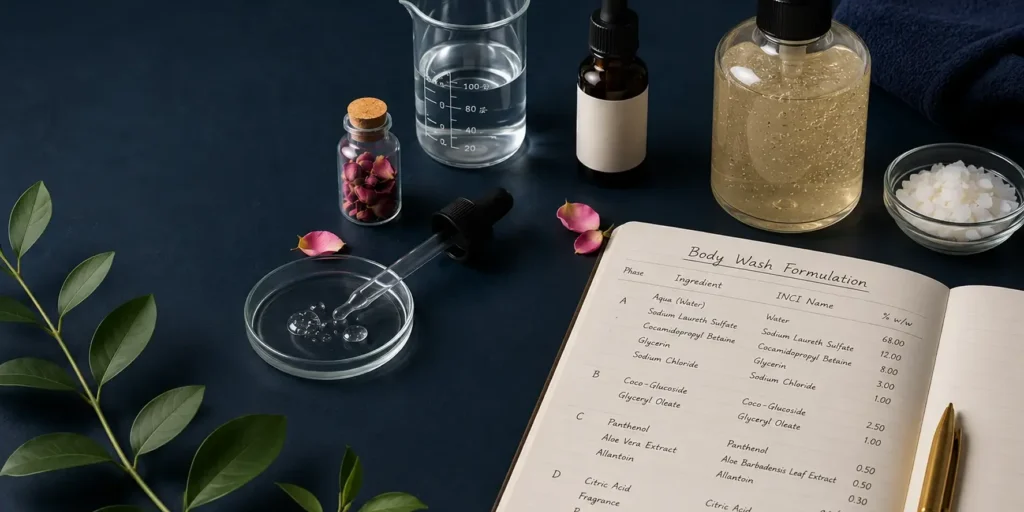
It begins in a small lab beaker, but the real fight is in the marketplace. Let’s say you made 500 grams of cream for the very first time. The emulsion worked, the texture was not bad and the pH was quite well behaved. You said to yourself, “That’s it! Now I am a formulator!” Then after two weeks oil starts to float on top of that cream. After three months, the preservative system fails in practice. The supplier quietly changes the grade of the emulsifier and your silky cream turns weirdly sticky. When you go from 500 grams to 50 kg, the formula treats you as if it has never seen you. That’s the true divide. Another thing is learning cosmetic formulation. The skill of knowing how to conceive well is a totally different thing. You learn the skill by reading TDS, keeping a lab journal, knowing suppliers, doing sensory evaluation, reading the language of stability fail, writing safe claims and knowing market reality. Dermax Lab Academy teaches exactly how to fill this gap, not just “how to make a cream” but “how to make a product that survives in the lab, on the shelf, with customers, and at the regulatory table. A Little History: When Did Formulation in Cosmetics Get So Difficult? For thousands of years, oils, waxes, fragrances and plant extracts have been used for skin and beauty. Ancient Egyptian beauty practices included oils, honey, mineral colors and perfumes. But the true birth of modern cosmetic formulation took place when beauty products moved beyond “home mixtures” into a system of industry, science, microbiology, packaging and law. People used to make a balm or an oil for their own use. Now a cream has to survive hot Chennai, dry Delhi, humid Dhaka, aircon shops, online delivery, plastic jars, glass bottles, 18 months shelf life and social media claims. Did you know- 1: Modern cosmetic formulation is not just chemistry. It is a ‘live system’ where chemistry, microbiology, physics, supply chain, law and human sensory experience all come into play. 1. Reading Raw Material TDS: The True ID Card of an Ingredient A common mistake for new formulators is buying ingredients on the basis of a pretty marketing brochure from a supplier. But a brochure is a story dressed up. The real birth certificate is a Technical Data Sheet, or TDS. A TDS tells you: You are buying blind if you don’t check the INCI name Just because it says “Hyaluronic Acid” doesn’t mean all products are created equal. For one supplier it could be pure Sodium Hyaluronate. In other supplier’s case it may be a molecular weight blend of several. Elsewhere it can be a diluted raw material in glycerin. The marketing name speaks a dream. The Truth is in the INCI name. Did you know- 2: Hyaluronic Acid raw materials sold under the same name may not feel the same on the skin, because changing the molecular weight distribution changes viscosity, skin feel and hydration perception. Must Follow Recommended Use Level If the TDS says 0.5-2% that is not a decorative line. If you use less it might not work. If you use more, you may be damaging the texture, increasing irritation or wasting money. At Dermax Lab Academy, formulators are taught that the idea “if an ingredient is good, using more will be better” can often destroy the formula. If the phase compatibility is not right, the ingredient will stay on paper, not go into the formula. Some ingredients go into the water phase, some into the oil phase and some into the cool down phase. For example , if you add a heat sensitive active at 75C , the name is still in the formula but the function is not . pH Is the State of the Formula Vitamin C or L-Ascorbic Acid generally likes a low pH. Salicylic Acid needs to be in an acidic environment to function as a BHA. AHA is also pH dependent. If the pH is wrong, an active ingredient is often just a “label decoration” ingredient. Make it a Habit Before adding a new ingredient to a formula, read the entire ingredient’s TDS. Then write a one-page synopsis of the ingredients. It may take 20 minutes but it can save you 20 days of trouble later. 2. Formulation Lab Journal: Don’t Rely on Your Memory A new formulator thinks, “I will remember this!” Three months later, trying to replicate the same batch, the only question that comes to mind is – “When did I add Phase B?” Lab journal. Not just a notebook. It’s your detective journal of formulations. What Should Be in a Good Lab Notebook? Formula I.D. & Version No.: Formula-001-v1 Formula-001-v2 Otherwise, which batch was sent for stability testing, which one was a customer sample, which one was a failed trial – everything will become confusing. Batch Weight (Kg): Do not say the percentage only. Actual Weight (in grams) * * Without knowing the total batch size it is hard to recreate the real batch from percentage. Supplier/Lot number: Two lots of the same ingredient can act differently. If the supplier changes the grade, then your formula changes without you even changing the formula. Notes on the process: These little details solve huge mysteries. What temperature you mixed, how many minutes you homogenized, what Phase A looked like, what the pH was before pH adjustment. Sensory evaluation at T0: Write everything: color, smell, viscosity, spreadability, tackiness, absorption, residue. Your starting point is T0. pH Monitoring: The pH might be fine today but it won’t be fine after three months. Did you know- 3 Many emulsions look beautiful on day one, but pH drift, viscosity drop or droplet coalescence may start during storage and are often seen much later. Golden Rule If it wasn’t written down, it didn’t happen. Memory tells stories, notes tell the truth. 3. Stability Testing: The Language of the Formula, Not Pass/Fail Many people have a stability testing exam. They are happy if