

It begins in a small lab beaker, but the real fight is in the marketplace.

Let’s say you made 500 grams of cream for the very first time. The emulsion worked, the texture was not bad and the pH was quite well behaved. You said to yourself, “That’s it! Now I am a formulator!”
Then after two weeks oil starts to float on top of that cream. After three months, the preservative system fails in practice. The supplier quietly changes the grade of the emulsifier and your silky cream turns weirdly sticky. When you go from 500 grams to 50 kg, the formula treats you as if it has never seen you.
That’s the true divide.
Another thing is learning cosmetic formulation. The skill of knowing how to conceive well is a totally different thing. You learn the skill by reading TDS, keeping a lab journal, knowing suppliers, doing sensory evaluation, reading the language of stability fail, writing safe claims and knowing market reality.
Dermax Lab Academy teaches exactly how to fill this gap, not just “how to make a cream” but “how to make a product that survives in the lab, on the shelf, with customers, and at the regulatory table.
A Little History: When Did Formulation in Cosmetics Get So Difficult?

For thousands of years, oils, waxes, fragrances and plant extracts have been used for skin and beauty. Ancient Egyptian beauty practices included oils, honey, mineral colors and perfumes. But the true birth of modern cosmetic formulation took place when beauty products moved beyond “home mixtures” into a system of industry, science, microbiology, packaging and law.
People used to make a balm or an oil for their own use. Now a cream has to survive hot Chennai, dry Delhi, humid Dhaka, aircon shops, online delivery, plastic jars, glass bottles, 18 months shelf life and social media claims.
Did you know- 1: Modern cosmetic formulation is not just chemistry. It is a ‘live system’ where chemistry, microbiology, physics, supply chain, law and human sensory experience all come into play.
1. Reading Raw Material TDS: The True ID Card of an Ingredient
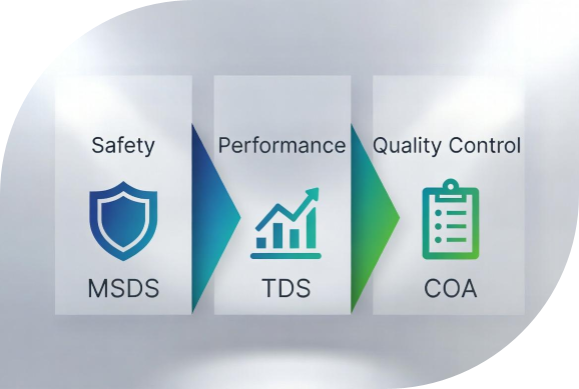
A common mistake for new formulators is buying ingredients on the basis of a pretty marketing brochure from a supplier. But a brochure is a story dressed up. The real birth certificate is a Technical Data Sheet, or TDS.
A TDS tells you:
- INCI Name
- What the ingredient is really made of
- How much is safe or effective to use?
- which phase should be appended to
- What pH does it work at?
- What ingredients it could clash with
- How it reacts to heat, light or oxidation.
You are buying blind if you don’t check the INCI name

Just because it says “Hyaluronic Acid” doesn’t mean all products are created equal. For one supplier it could be pure Sodium Hyaluronate. In other supplier’s case it may be a molecular weight blend of several. Elsewhere it can be a diluted raw material in glycerin.
The marketing name speaks a dream. The Truth is in the INCI name.
Did you know- 2: Hyaluronic Acid raw materials sold under the same name may not feel the same on the skin, because changing the molecular weight distribution changes viscosity, skin feel and hydration perception.
Must Follow Recommended Use Level
If the TDS says 0.5-2% that is not a decorative line. If you use less it might not work. If you use more, you may be damaging the texture, increasing irritation or wasting money.
At Dermax Lab Academy, formulators are taught that the idea “if an ingredient is good, using more will be better” can often destroy the formula.
If the phase compatibility is not right, the ingredient will stay on paper, not go into the formula.
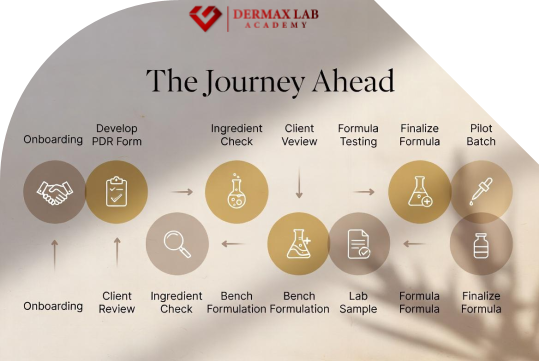
Some ingredients go into the water phase, some into the oil phase and some into the cool down phase. For example , if you add a heat sensitive active at 75C , the name is still in the formula but the function is not .
pH Is the State of the Formula
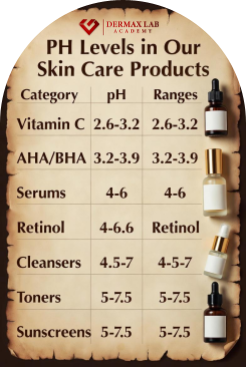
Vitamin C or L-Ascorbic Acid generally likes a low pH. Salicylic Acid needs to be in an acidic environment to function as a BHA. AHA is also pH dependent. If the pH is wrong, an active ingredient is often just a “label decoration” ingredient.
Make it a Habit
Before adding a new ingredient to a formula, read the entire ingredient’s TDS. Then write a one-page synopsis of the ingredients. It may take 20 minutes but it can save you 20 days of trouble later.
2. Formulation Lab Journal: Don’t Rely on Your Memory
A new formulator thinks, “I will remember this!”
Three months later, trying to replicate the same batch, the only question that comes to mind is – “When did I add Phase B?”
Lab journal. Not just a notebook. It’s your detective journal of formulations.
What Should Be in a Good Lab Notebook?
Formula I.D. & Version No.:
Formula-001-v1 Formula-001-v2 Otherwise, which batch was sent for stability testing, which one was a customer sample, which one was a failed trial – everything will become confusing.
Batch Weight (Kg):
Do not say the percentage only. Actual Weight (in grams) * * Without knowing the total batch size it is hard to recreate the real batch from percentage.
Supplier/Lot number:
Two lots of the same ingredient can act differently. If the supplier changes the grade, then your formula changes without you even changing the formula.
Notes on the process:
These little details solve huge mysteries. What temperature you mixed, how many minutes you homogenized, what Phase A looked like, what the pH was before pH adjustment.
Sensory evaluation at T0:
Write everything: color, smell, viscosity, spreadability, tackiness, absorption, residue. Your starting point is T0.
pH Monitoring:
The pH might be fine today but it won’t be fine after three months.
Did you know- 3 Many emulsions look beautiful on day one, but pH drift, viscosity drop or droplet coalescence may start during storage and are often seen much later.
Golden Rule
If it wasn’t written down, it didn’t happen. Memory tells stories, notes tell the truth.
3. Stability Testing: The Language of the Formula, Not Pass/Fail
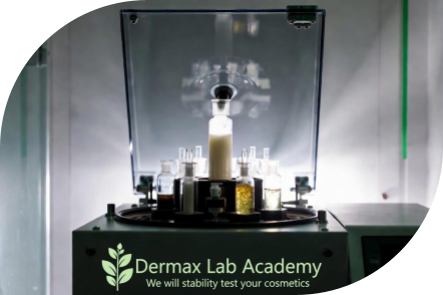
Many people have a stability testing exam. They are happy if it passes. If it doesn’t work they cry. But the experienced formulator does not read a stability failure as a report card, but as a diagnostic message.
Accelerated Stability
Typically, the formulation is stored at 40°C / 75% RH to allow aging stresses to be observed in a short period of time. Appearance, colour, odour, pH, viscosity and emulsion stability are observed.
Real Time Stability
Real-time data is taken at 25°C or ambient conditions. Accelerated testing provides prediction; real-time testing provides confirmation.
Freeze and Thaw Cycle
Shipping stress is clearly indicated by cold-hot cycles. If a cream becomes grainy when it gets cold, it indicates a weak emulsifier system or control of wax crystallization.
Photostability
Light can be a huge enemy if your formula contains vitamin C, retinoids, bakuchiol, peptides, or light-sensitive ingredients. If so, the packaging is also part of the formulation system.
Did you know- 4. Sometimes opaque packaging protects the active ingredient. That means the bottle is not just packaging. It is part of the stability strategy.
What does a failure signify?
- Phase separation: Emulsifier is wrong Low phase ratio or incompatibility is there
- Graininess: wax/butter crystallization
- Browning/yellowing: oxidation, Maillard reaction or active degradation
- pH drift downward: Microbial problem or ingredient degradation?
- Viscosity loss: thickener breakdown, electrolyte sensitivity, or pH change
“Failed formula doesn’t mean failed formulator,” formulators learn at Dermax Lab Academy. The formula is talking to you. You just have to know its language.
4. Ingredient Interaction: Ingredients Don’t Always Get Along
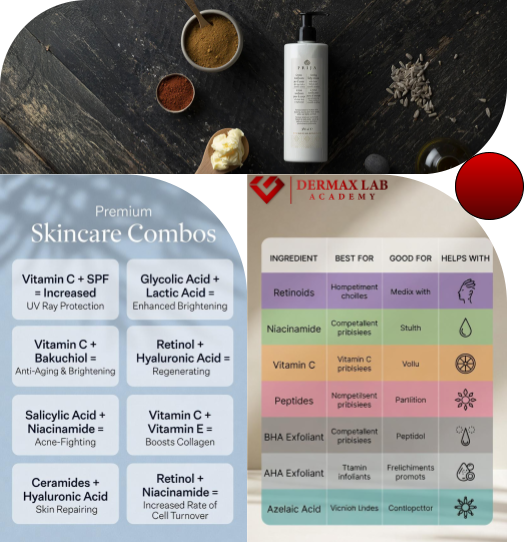
Textbooks tell you what glycerin does, what niacinamide does and what carbomer does. But when glycerin, niacinamide, carbomer, preservative, fragrance and electrolyte are all together, the real formulation challenge is to see who fights with whom.
pH Battle
Niacinamide is generally stable at a medium, skin friendly pH. L-Ascorbic Acid needs an acidic pH. Combining the two in the same water phase and expecting both to perform fully can often be unrealistic.
Sensitivity to Electrolytes
If you add salts or ionic actives or some preservatives to a carbomer-based gel, the gel can suddenly thin. Maybe a new formulator thinks, “What did I do wrong?” The polymer has shrunk, basically.
Did you know? 5: Carbomer gel is a swollen network. “With electrolyte coming in, that net collapses and loses viscosity.
Antagonism of Preservatives
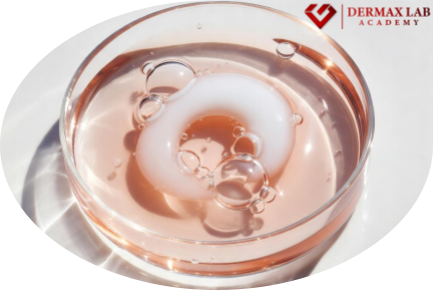
Certain ingredients bind to preservative molecules or entrap them in micelles. Therefore, the formula contains preservative but the active level of preservative in the water phase is low. And that is why we do preservative efficacy testing on the entire formula.
Oxidation Catalyst

Trace amounts of iron, copper or manganese can speed up the active degradation or rancidity of oil. Important here: deionized water, clean raw materials and chelating agents.
Tests in a Small Beaker
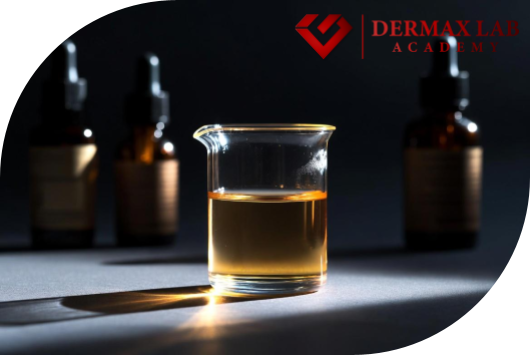
Before using two unfamiliar ingredients together, do a 20-gram beaker trial. Check compatibility in the same concentration same pH and same temperature. A small test can avoid a big disaster.
5. Sensory Evaluation: A Cream Has to Work, But It Has to Feel Good Too
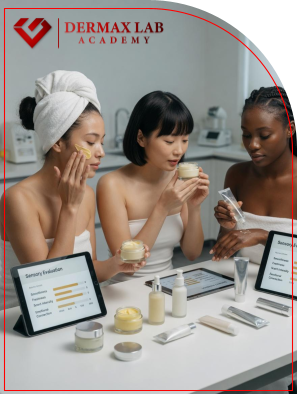
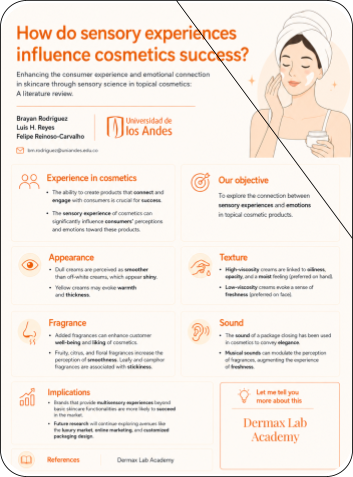
If a moisturizer works but leaves a sticky feeling on the face, the customer will not buy a second bottle. In the beauty industry, skin feel is as important as efficacy.
Generate Sensory Vocabulary
It’s not enough to say “feels good” or “feels bad”. Let me be clear:
- Greasy or silky?
- Tacky or cushy?
- Smooth or sluggish?
- Quick absorption or slow absorption?
- Dry finish, invisible residue, powdery, or glossy?
- What is the top note, middle note and dry-down of the fragrance?
Did you know- 6: Both “silky” and “greasy” feel slippery, but consumers perceive them very differently – one feels premium, and the other can feel heavy or uncomfortable.
Why you need to compare batch with batch
Batch 001 is great. Batch 003 is a little different. The formula is the same, the CMO is the same, but shear, temperature and raw material lot combined can change the sensory profile.
A trained formulator can pick this up before it’s shipped. Otherwise it’s in customer reviews: “The last batch was better, this one feels different.
Dermax Lab Academy considers sensory evaluation as an important skill, for products survive in the market not just by science, but by experience.
6. Supplier Relationships: A Supplier Is Not Just a Seller; It Is Part of the Formula
A new formulator buys glycerin based on price only. An experienced formulator considers supplier history, CoA, consistency, documentation and communication.
Plant-Derived Ingredients Are Not All the Same Year-to-Year
Rosehip oil, shea butter, botanical extract, all of these are agricultural materials. Harvest year, climate, region and processing can change fatty acid profile, peroxide value, color and odor.
Did you know- 7: Rosehip oil from the same supplier can smell different, have a different color and oxidation profile in the 2023 and 2024 harvests. Both could be real, but formula behaviour might be different.
Request CoA
You get a Certificate of Analysis , or CoA , for that lot . That is your test result . This is not a range of specifications, this is the actual value. Peroxide value, assay, moisture, pH, microbial count—all should be checked.
Second Vendor Qualification
If one supplier drops out, production will cease. “This is a business risk. It is common practice to keep a validated backup supplier for critical ingredients.
Mini Batch When Lot Changes
When a new lot comes in, make a small batch with the reference formula. T0 sensory, pH, and viscosity were compared. Catch lot surprises before full-scale production.
7. When to Stop Adjusting and Start Testing
Formulators have a sweet trap, make it a little silkier, add a little more fragrance, increase emulsifier by 0.1%, increase Vitamin E from 0.5 to 0.6…
Thus 17 versions are produced, but no formal stability testing ever begins.
Good enough isn’t perfect
Good enough means that the formula works to your pre-defined specification.
The specification may contain:
- pH : 5.0-5.5
- Range of viscosity
- Target Spreadability
- Non-sticky finish
- T0 no phase separation
- Preservative system chosen
- COGS Target
Did you know- 8: Endless tweaking is often not product improvement, it is decision avoidance. A professional formulator knows when to go from “a little more” to “now test”.
Development Cost Is Above Raw Material
With every new version you incur time, material, documentation, stability delay and market delay. Timing is so, so important in the beauty business. Trends come and go, competitors emerge and consumer interest wanes.
Dermax Lab Academy teaches formulators to “Learn to launch a validated good product, not a perfect one.”
8. Claims Language: Write Pretty Claims, But Don’t Abandon the Law
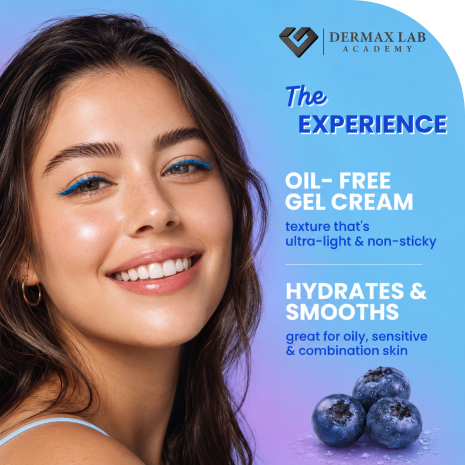
The marketing team wants to say, “Cures acne,” “Repairs barrier,” “Heals pigmentation”
Then the reg team puts their hands on their heads.
A cosmetic claim is not copywriting, but a regulatory stance.
Cosmetic Claim: Level 1
These are relatively safer:
- visibly boosts the skin’s glow
- the skin feels smoother
- skin tone is improved
- diminishes the appearance of fine lines
They are about look and feel, not about treating disease.
Tier 2: Structure-function claim style
For instance:
- helps support skin barrier function
- helps to maintain the moisture balance
- Supports the appearance of collagen
They need to be backed up. Data from publications, supplier studies, consumer perception tests or clinical support may be needed.
Drug Claim: Tier Three
This place is dangerous:
- fights acne.
- heals eczema.
- n dark spot healing
- heals damaged skin disease
If a product is used to diagnose, cure, mitigate, treat or prevent disease or to affect the structure or function of the body, then the product may be considered a drug by the FDA. “Cosmeceutical” is not a separate category under FDA law. (U.S. Food and Drug Administraion)
Did You Know- 9 : The term “cosmeceutical” is not a separate legal category under FDA law, but is popular in marketing. A product may be a cosmetic, a drug or both. (U.S. Food and Drug Administraion)
Build a Claims Substantiation File
For each claim, keep:
- Which ingredient backs up the claim
- What is the concentration in the formula
- If there is evidence at this concentration
- Published study, supplier data, clinical data, consumer test
- What the final language will be
Dermax Lab Academy simple formula: formulate for efficacy, claim for compliance.
9. 500 grams and 50 kg are not the same thing: From the Lab to Scale-Up
In the lab, 500 gram batches heat and cool quickly and an immersion blender provides high shear. However, in a 50 kg vessel the heat distribution, shear profile and cooling rate are all changed.
Thermal Dynamics
The edge and center temperature of a commercial vessel might not be the same. If cooling is not controlled in the critical 45–55°C range for wax recrystallization, the texture may be grainy.
Dynamics of Shear
Local high shear from lab blender. A commercial high shear mixer has a different shear distribution. Droplet size and texture may change. Emulsion stability may change.
Pilot Batch Requirement
An important step in formula validation is a pilot batch of 5–10 kg using commercial equipment. This isn’t small production. It’s the truth test of scaling up.
Did you know- 10: The same formula can be stable in a lab beaker but unstable in a commercial vessel, not because the formula has changed but because the process environment has changed.
Develop a Process Map for the CMO, Not Just a Recipe
Write:
- Temperature phase A
- Phase B addition order
- rpm/time mixing
- Homogenizing the time
- rate of cooling
- pH adjustment temperature
- Temperature filling
The more transparent the process, the less surprises.
10. A Formulator’s Work Is More Than Just Lab Work
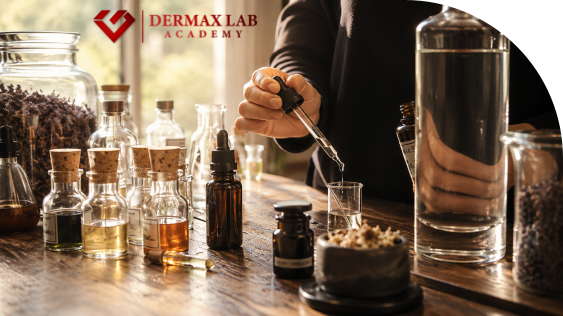
A good formulator does not just make cream, they add value to brand decisions.
Know Cost of Goods or COGS
How much is it with 8% rosehip oil? What is the unit cost for organic grade? Is it suitable for a premium positioning?
You don’t always have to go with the cheapest ingredient. But if you pick an expensive ingredient, it has to be a business decision.
First, address the regulatory pathway
Salicylic Acid, UV filters, restricted ingredients, preservatives – each can have different legal consequences depending on the market. If an ingredient is identified as restricted after the export market is determined, the cost of reformulation can be very high.
Formula Restricts Marketing Claims
If you have Niacinamide in the formula at 0.5%, you can’t say “5% Niacinamide.” If you have Hyaluronic Acid at 0.1%, you should check the evidence before making a dramatic plumping claim.
Dermax Lab Academy trains formulators not only for the formulation table but also for the brand table.
Regulatory Compliance Guide : FDA, EU, ASEAN, India and Global Safety Regulations
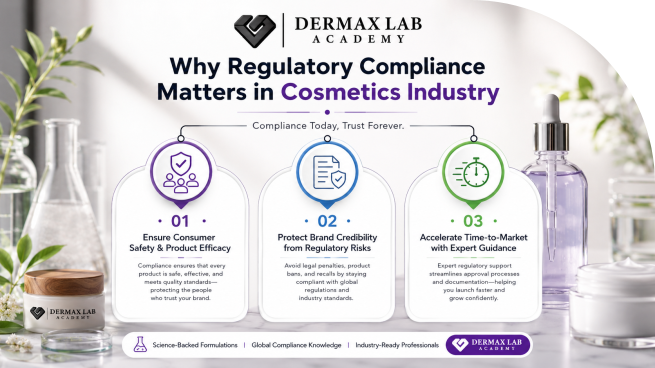
FDA / U.S.
In the USA, cosmetics usually do not need FDA approval before they are marketed. But the legal responsibility for the safety of products rests with companies and individuals. MoCRA 2022 greatly expands FDA oversight of cosmetics and adds requirements such as facility registration, product listing, safety substantiation, and adverse event reporting. (U.S. Food and Drug Administraion)
Official web sites:
- Modernization of Cosmetics Regulation Act of 2022 (MoCRA)
- Registration & Listing of Cosmetic Product Facilities and Products
- Cosmetics Labeling Claims
The FDA reviews cosmetic claims, but the FTC also plays a role in advertising claims, and the FDA can also issue warning letters if a product marketed as a cosmetic makes unapproved drug claims. (U.S. Food and Drug Administraion)
European Union / EU
The EU Cosmetics Regulation (EC) No 1223/2009 lays down the basic rules on the safety assessment of cosmetic products, the responsible person, the product information file, notification, restrictions on ingredients and labelling. EU Regulation No 655/2013 establishes common criteria for cosmetic claims: compliance with the law, truthfulness, evidential support, honesty, fairness, and enabling informed decision-making. (EU Open Data Portal)
Official web addresses:
ASEAN.
The ASEAN Cosmetic Directive addresses cosmetic product safety, labeling, banned/restricted ingredients, preservatives, colorants and UV filters. The Singapore HSA states clearly that Cosmetic dealers have a legal responsibility to ensure the safety of products, labelling and compliance with the requirements on prohibited/restricted ingredients. (Health Sciences Authority)
Official URLs:
India / CDSCO
India has a well-defined regulatory framework for cosmetics, namely, the Cosmetics Rules, 2020. National Regulatory Authority of India CDSCO publishes Cosmetic rules and compliance documents. (CDSCO)
Official URLs:
Practical Checklist – Conformance
- Verify INCI name and concentration.
- Check restricted/prohibited lists as per market
- Check permitted levels of preservatives and UV filters
- Check if a cosmetic claim is becoming a drug claim
- Product information file/safety substantiation file
- Store Batch Record, CoA, TDS & Stability Data
- Check label language, net content, manufacturer/importer information and warnings
- Keep PET/Challenge Test & Stability Evidence for Final Formula
Final Words: Good Formulation Is Something More Than Chemistry

A new formulator believes that knowing the ingredients is enough. An experienced formulator understands that without a full understanding of the ingredient, process, supplier, pH, packaging, customer climate, regulation, claim and COGS, the product will not make it in the market.
Get started today:
- Read TDS.
- Keep a laboratory notebook.
- Log every batch.
- Learn the language of failure instability.
- Grasp supplier lots.
- Develop sensory language.
- Careful what you say.
- Calculate COGS.
- Don’t think 500 grams, think 50 kg.
- Don’t think 500 grams, think 50 kg.
At Dermax Lab Academy you can learn this real, professional, market-ready formulation mindset. Because great formulation isn’t just chemistry.
Great formulation is that chemistry that caters to customer, law, market, shelf life and brand trust all at once.

Sign up today at Dermax Lab where we begin with the end.
Author

Md. Al Emran Sardar
Co-Founder and instructor , Dermax Lab Academy
- Email : emransardar7368@gmail.com
- WhatsApp : +8801701015303
- LinkedIn : Linkedin
- Join my Group : D formula Lab